

Tippy
Tippy is a tipping platform that makes it easier for African creators to receive financial support from their audiences, through a personalized link supporters can use without creating an account.
Visit website (opens in a new tab)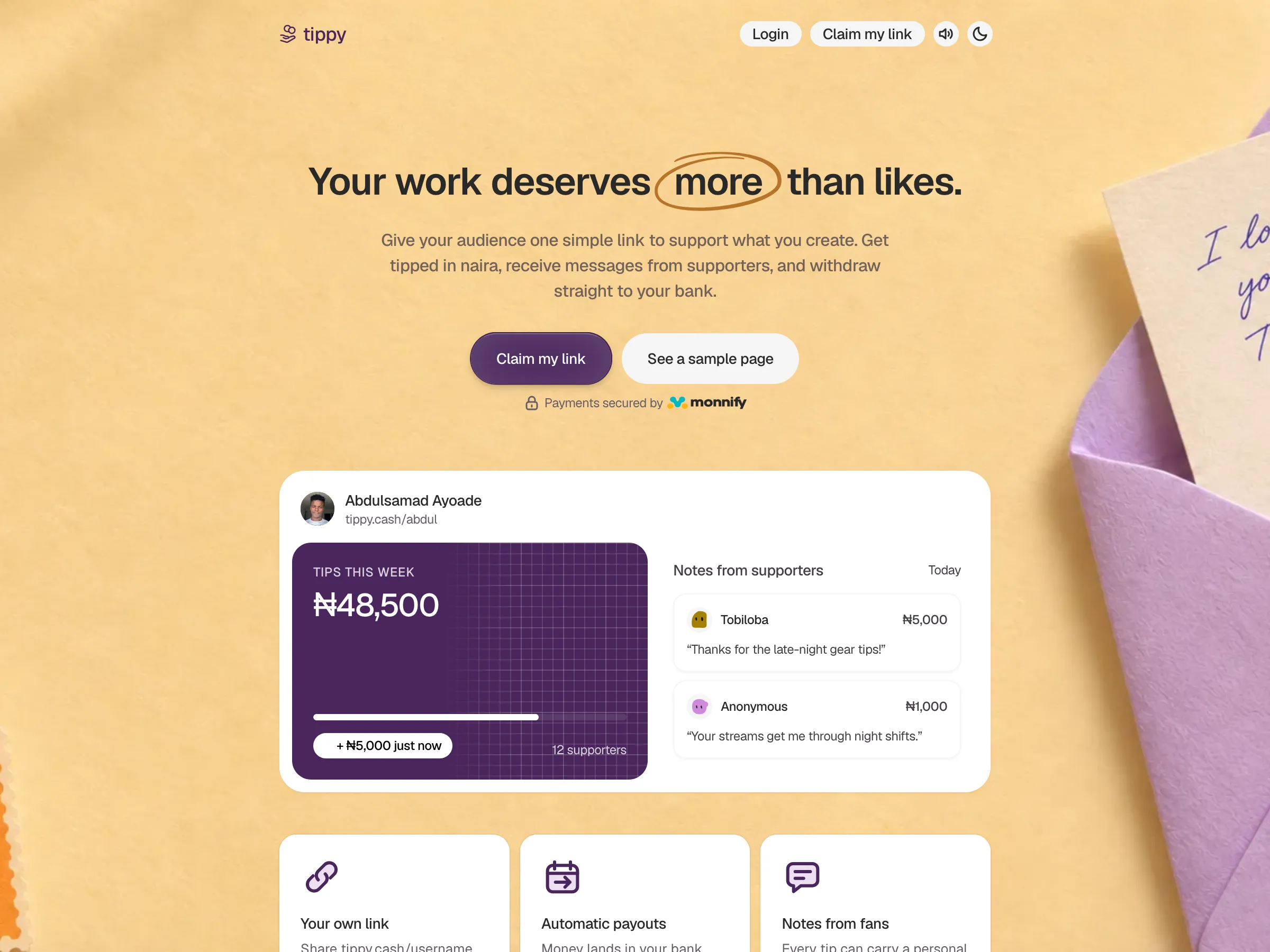
Overview
Tippy is a tipping platform that makes it easier for African creators to receive financial support from their audiences. Creators get a personalized link they can share across their platforms, allowing supporters to send tips and leave messages of appreciation without creating an account.
Context & Problem
Tippy began as a hackathon project. I wanted to challenge myself to take an idea from concept to a working product, and I was particularly interested in building something for creators.
African creators reach audiences around the world through platforms like Instagram, TikTok, and YouTube, but receiving direct financial support from those audiences isn’t always straightforward. Services like Ko-fi and Buy Me a Coffee offer simple tipping experiences, yet their payment and payout options aren’t fully accessible in countries like Nigeria. Patreon supports Nigerian creators, but its experience is primarily oriented around memberships and recurring support.
I saw an opportunity to build a simpler alternative: a way for African creators to receive one-time tips without relying on payment accounts they may not be able to access or asking supporters to commit to a membership.
The Solution
I built Tippy around a simple idea: supporting a creator should be as easy as sharing and opening a link.
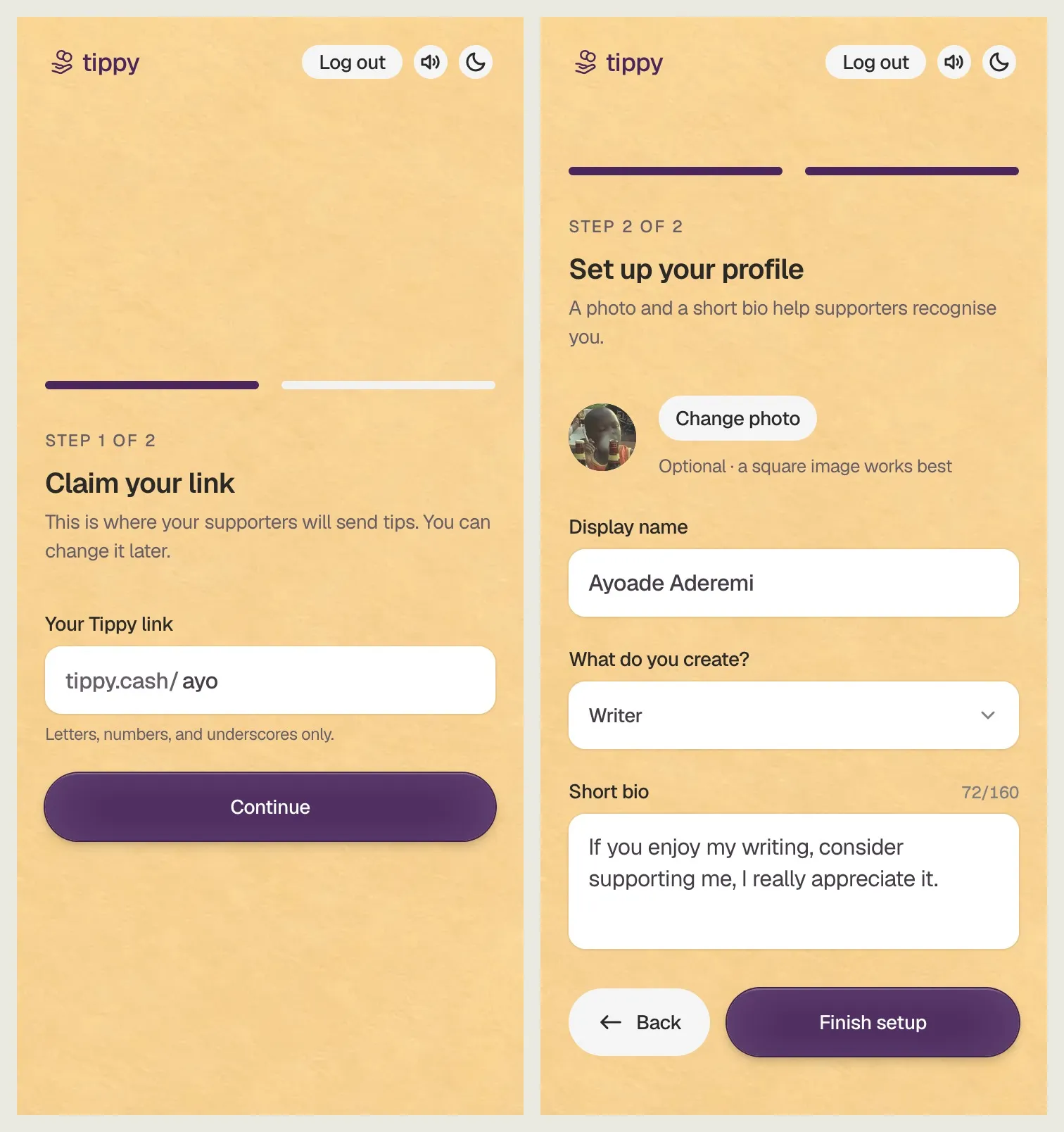
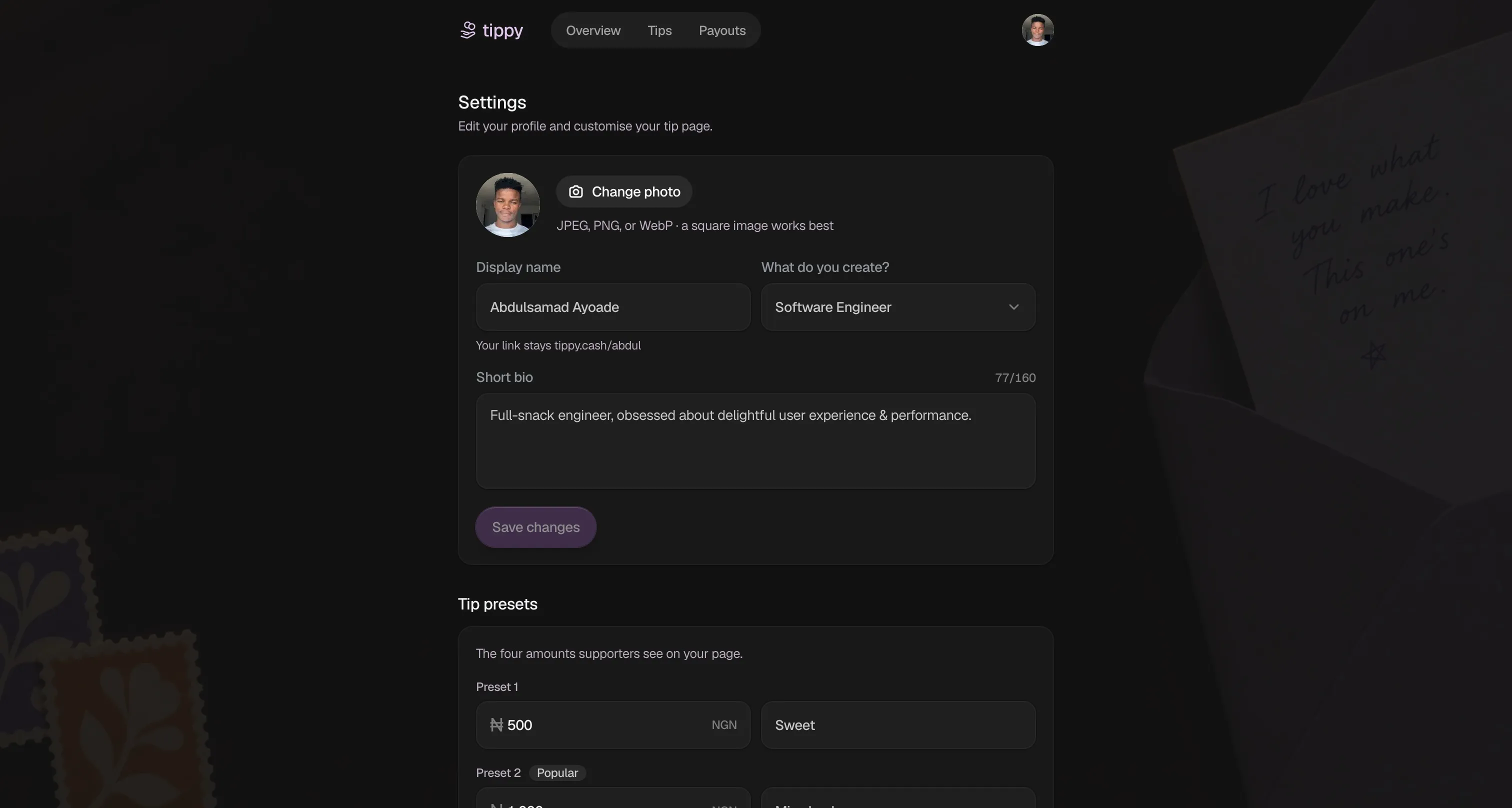
Creators can sign up with Google or email, set up a profile with a username, photo, and short bio, and share a personalized tipping link across their social platforms. They can also customize the suggested tipping amounts displayed on their page.
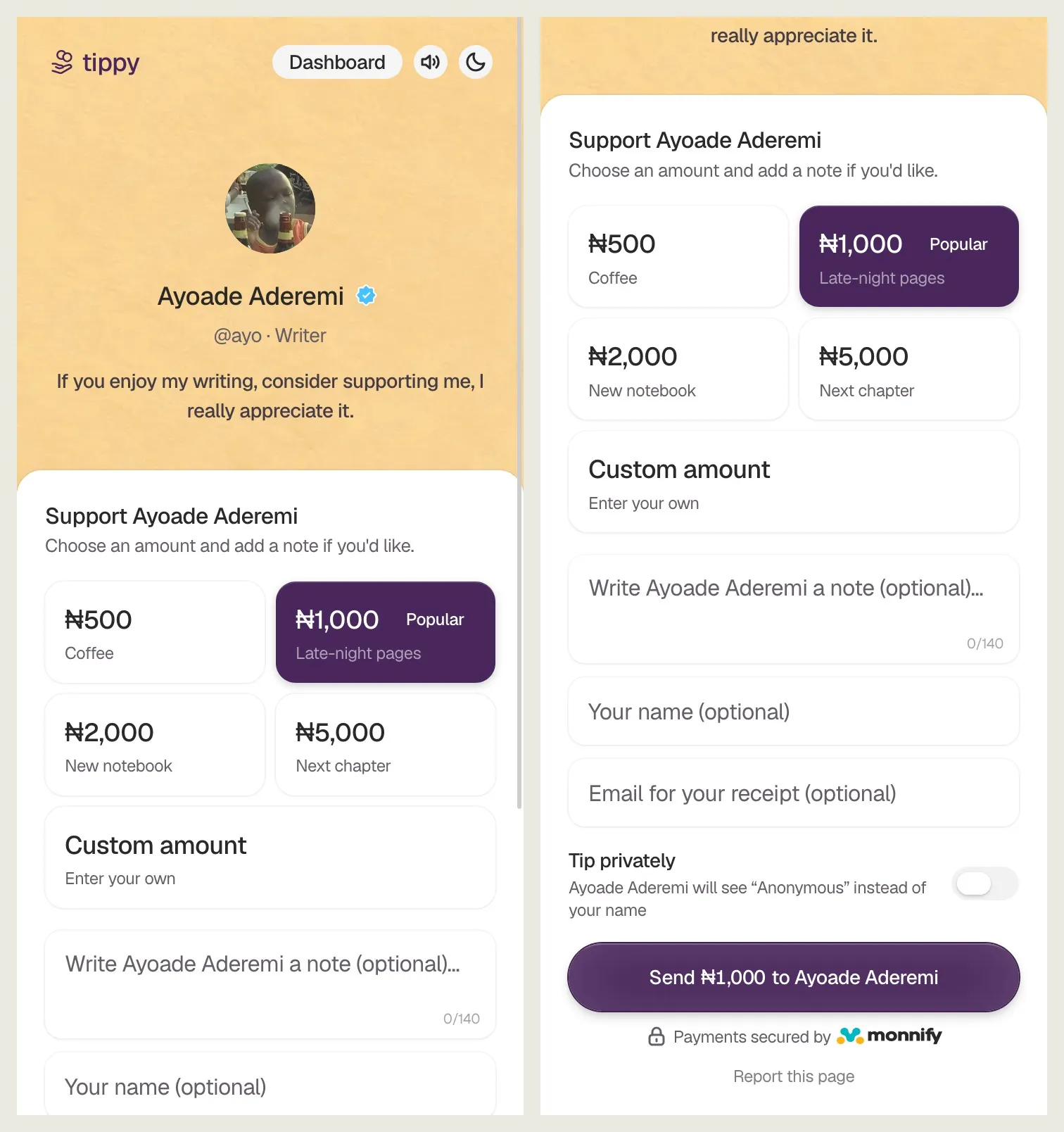
Supporters go directly to the creator’s page, choose a suggested amount or enter their own, leave an optional note, and complete their payment without creating an account. I kept both experiences deliberately straightforward to make getting started and showing appreciation as effortless as possible.
Design & Development
Designing in Code
With a hackathon deadline, I chose to design and prototype directly in code rather than work through a separate Figma phase. As a frontend engineer, this let me experiment with layouts, implement interactions, and refine the experience in the same environment.
Two priorities guided the design: make the product feel relevant to African creators, and keep onboarding and tipping intuitive. Designing in code helped me move quickly while testing those decisions in a working interface.
Building the Application
I used Next.js and React for the frontend and backend. Since tipping was the product’s core feature, introducing a separate backend service would have added complexity without a clear benefit at this stage. Tailwind CSS made it faster to build and revise the interface, while Neon (PostgreSQL) handled application data.
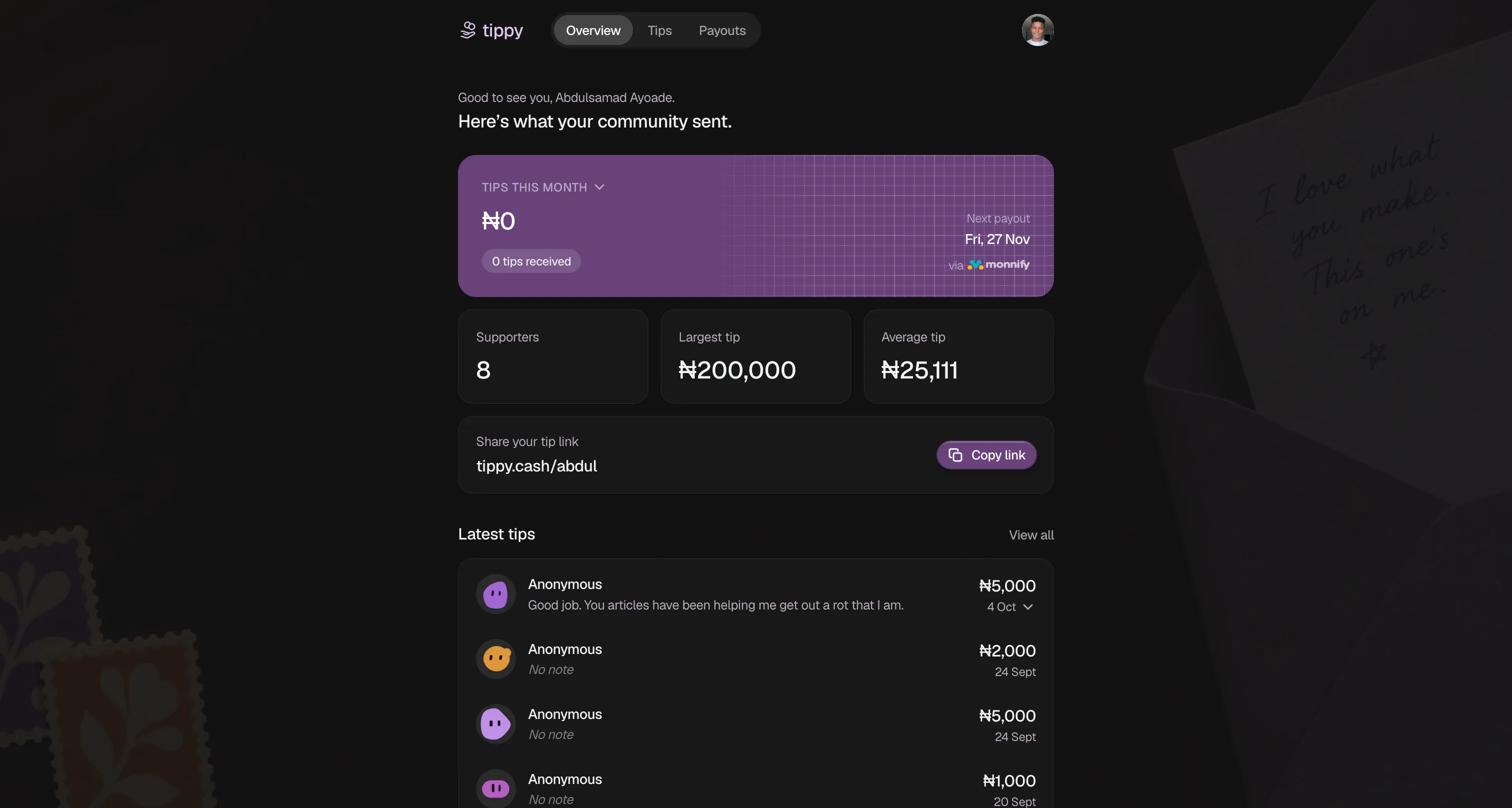
For authentication, I implemented Google sign-in and passwordless email links. I used Resend for verification emails, tip receipts and notifications, withdrawal updates, and account-status messages. I also built an admin interface for managing creators and operational actions, including blocking accounts.
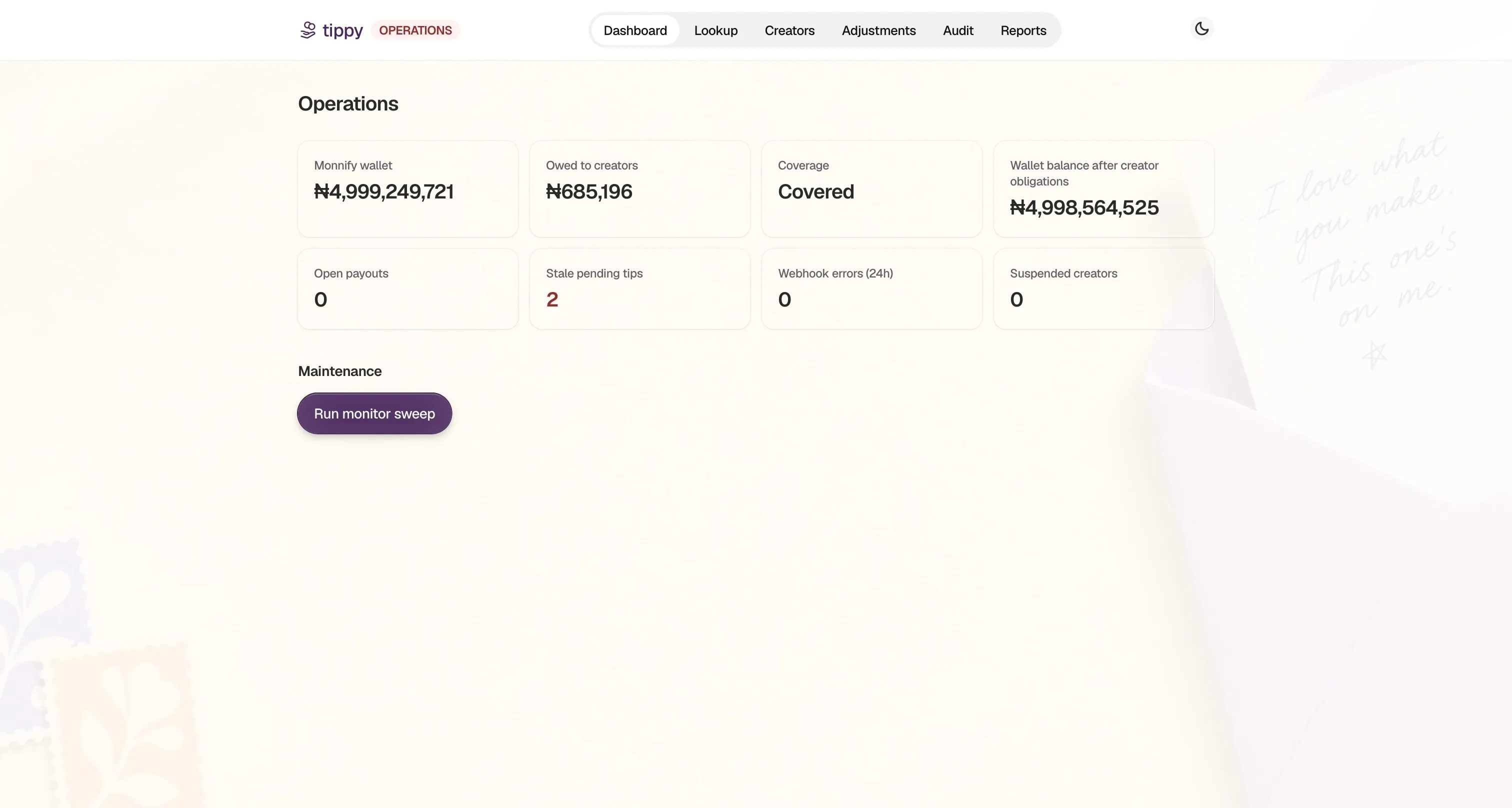
I deployed the application on Vercel, used Vercel Blob to store uploaded profile images, and integrated Sentry to monitor application errors.
Integrating Payments
I explored Paystack, Monnify, and Bachs before proceeding with Monnify for the initial implementation. While getting answers about integration and business requirements took longer than expected, Monnify’s sandbox allowed me to build and test the payment and withdrawal flows.
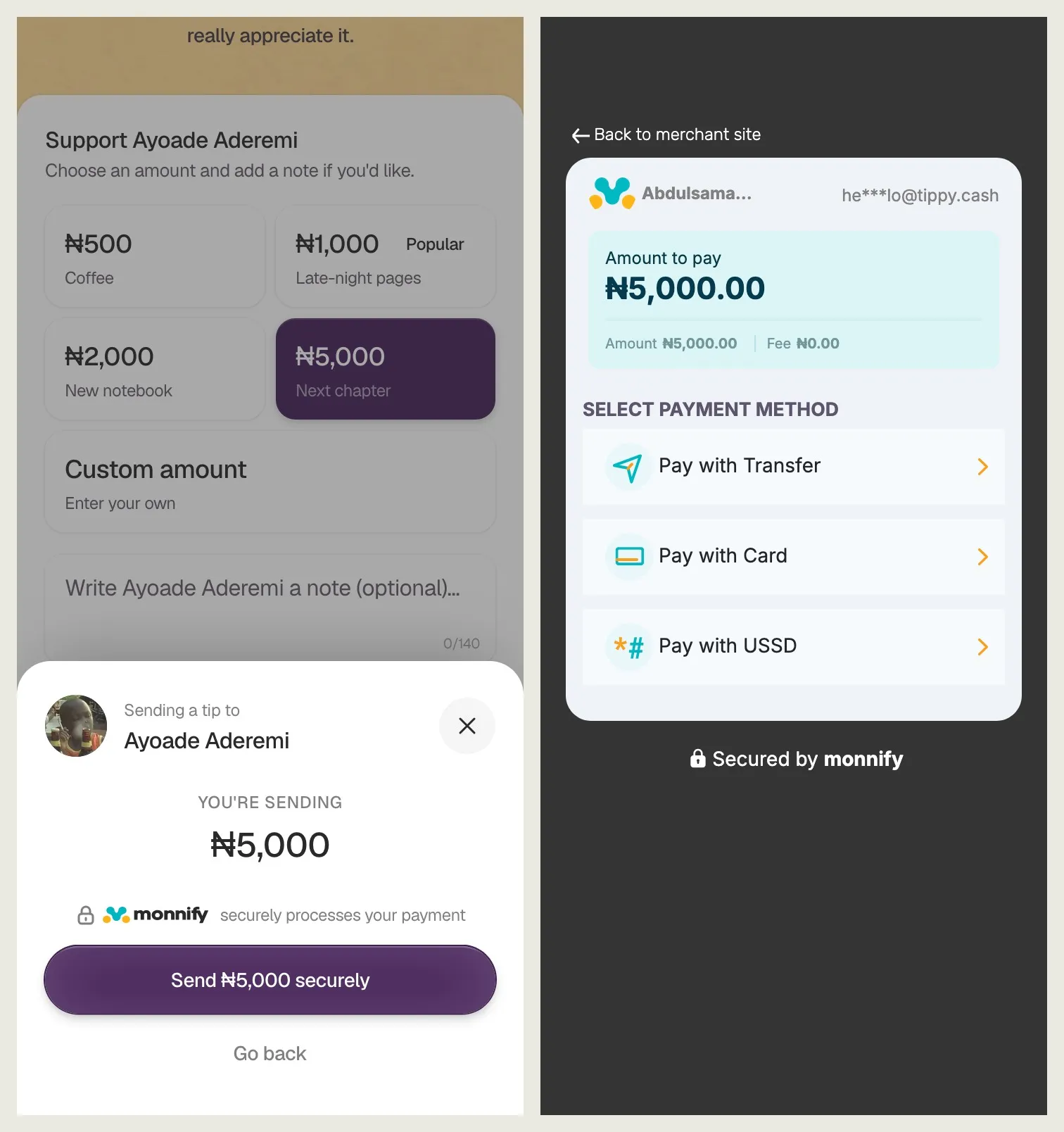
The important engineering work went beyond opening a checkout page: I needed a reliable way to identify who received each tip, confirm that money had actually been paid, and prevent a creator’s balance from being withdrawn twice.
Payment Architecture
Recording and Confirming Tips
When a supporter initiates a tip, Tippy first creates a pending payment record tied to the creator’s permanent ID and a unique payment reference. This matters because a public username can change, but the payment must always remain attached to the correct creator.
After checkout, Tippy confirms the payment on the server using a signed Monnify webhook or a status check with Monnify. It checks the payment reference, provider status, and amount before changing the tip to successful. Only a pending tip can make that transition, so two confirmations arriving together cannot credit the creator twice. A background check can reconcile payments when the original confirmation is missed.
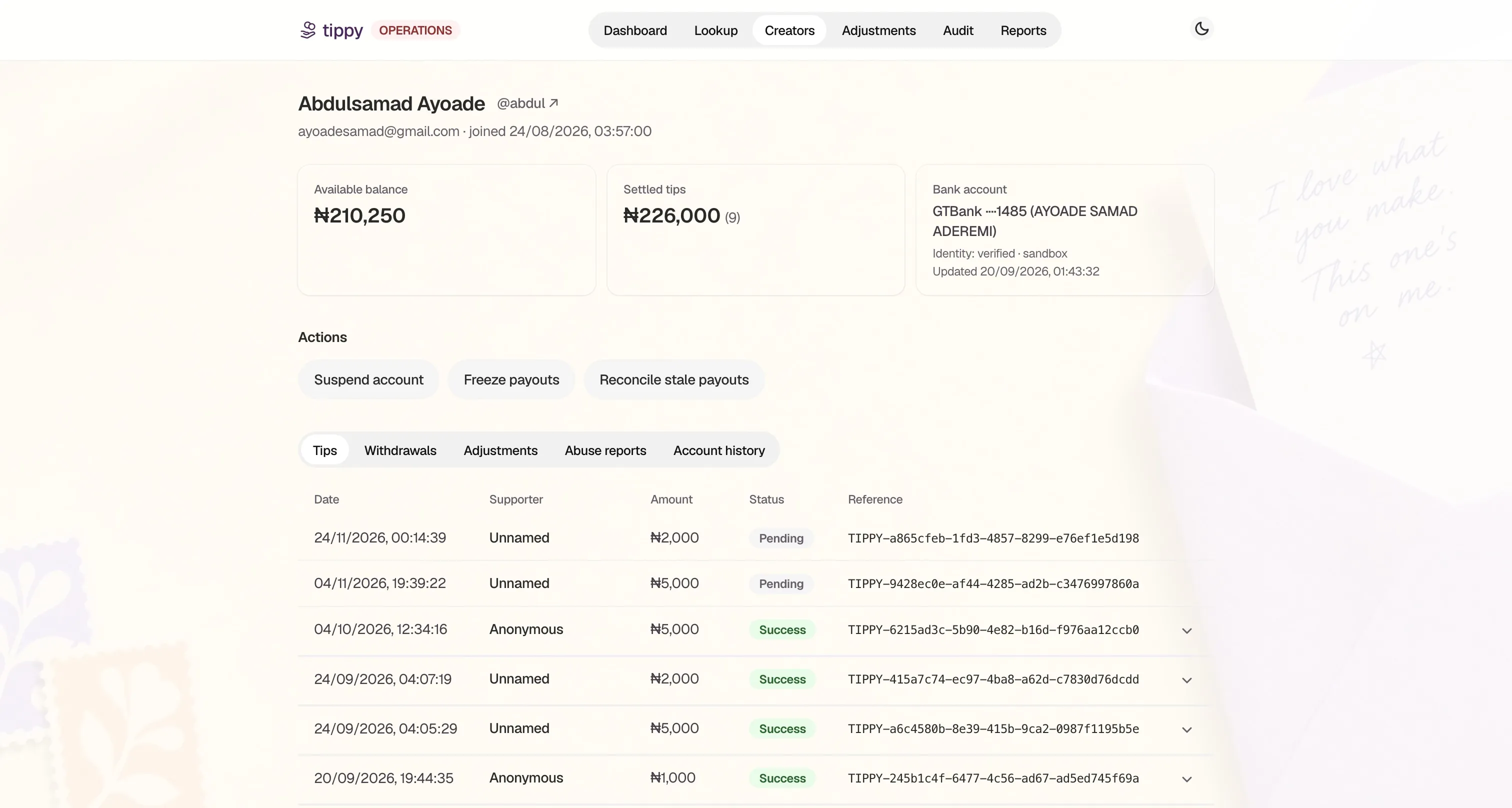
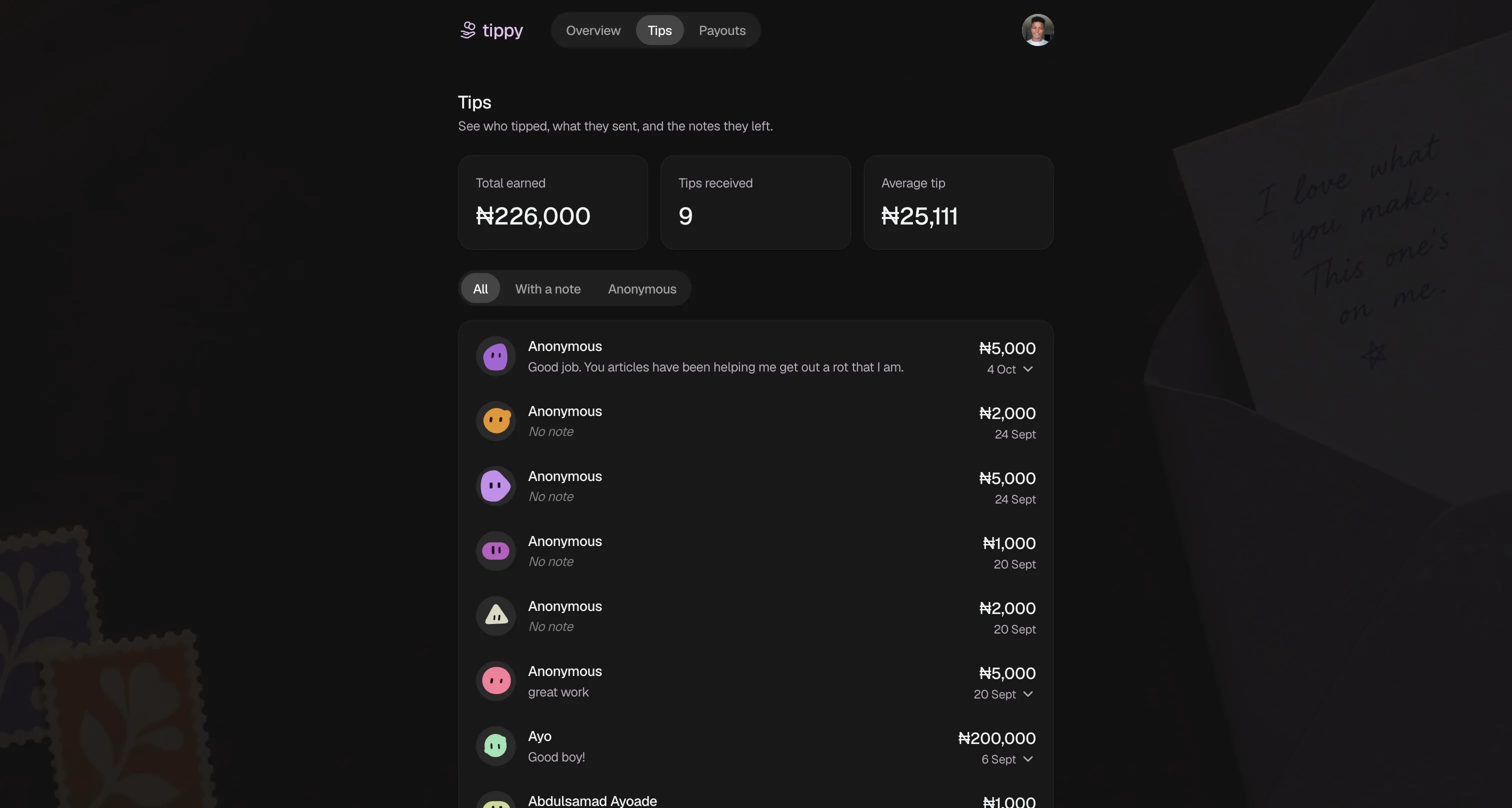
The creator’s dashboard reflects confirmed tips, and Tippy keeps the original tip amount separate from the amount the payment provider reports as collected or settled. This helps preserve an accurate record of what the creator earned.
Preventing Duplicate Withdrawals
Withdrawals presented a different risk: two requests could try to spend the same balance.
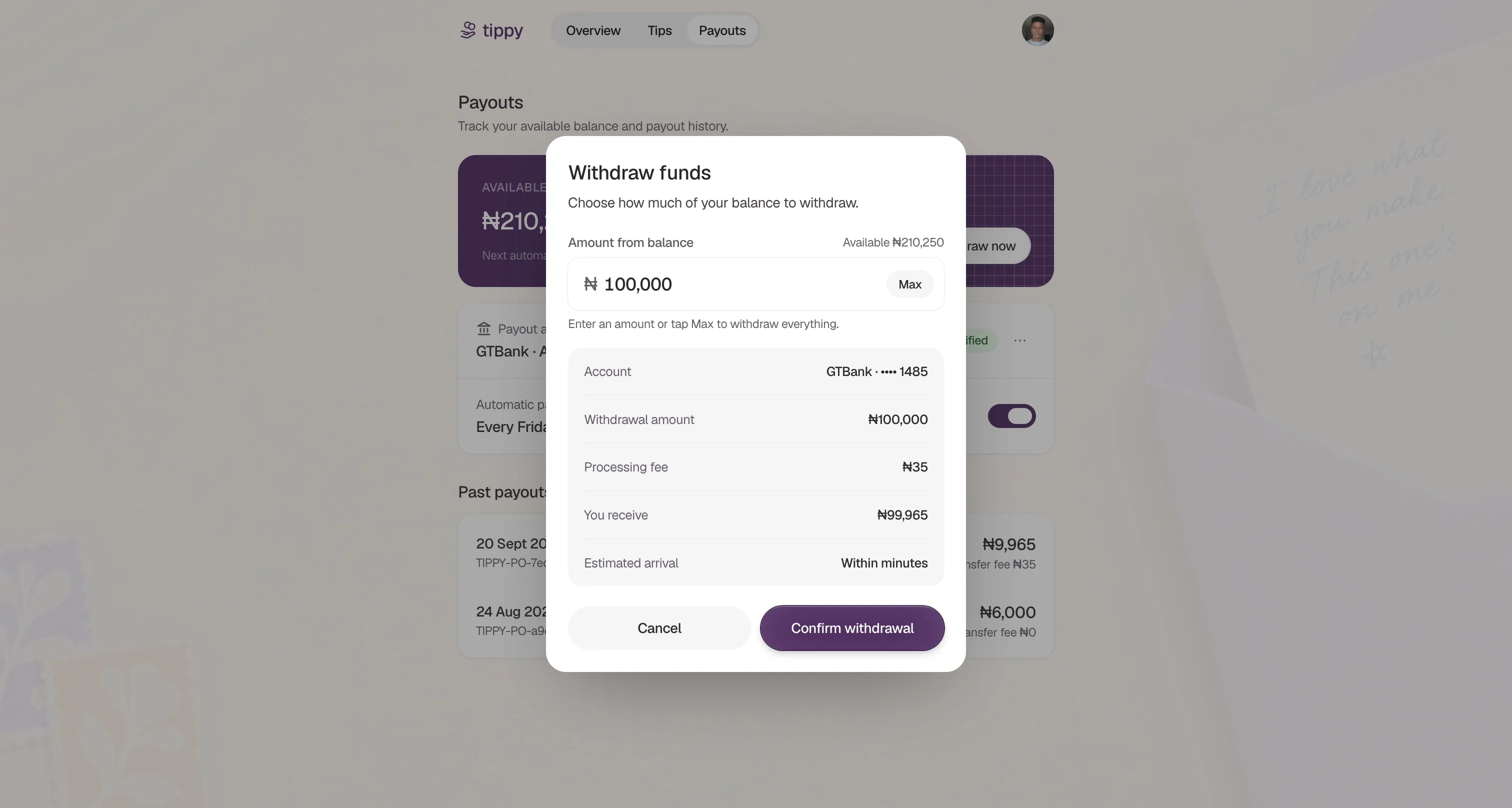
To prevent this, Tippy checks the creator’s available balance and records a pending payout before asking Monnify to transfer the money. The balance check and reservation happen while the creator record is locked, so a concurrent withdrawal sees the reserved amount.
For example, if a creator has ₦12,000 available and requests a ₦5,000 withdrawal, Tippy immediately reserves ₦5,000, leaving ₦7,000 available. The eventual bank transfer is the requested amount less any applicable transfer fee. A confirmed failure releases the reservation; an uncertain response leaves it in place until Tippy can verify the transfer’s status using its unique reference.
This also protects against a lost provider response: Tippy can look up the original transfer instead of accidentally creating a second one. Available balance is calculated from successful tips, signed adjustments, and payouts that are pending, processing, or paid; failed payouts do not reduce it.
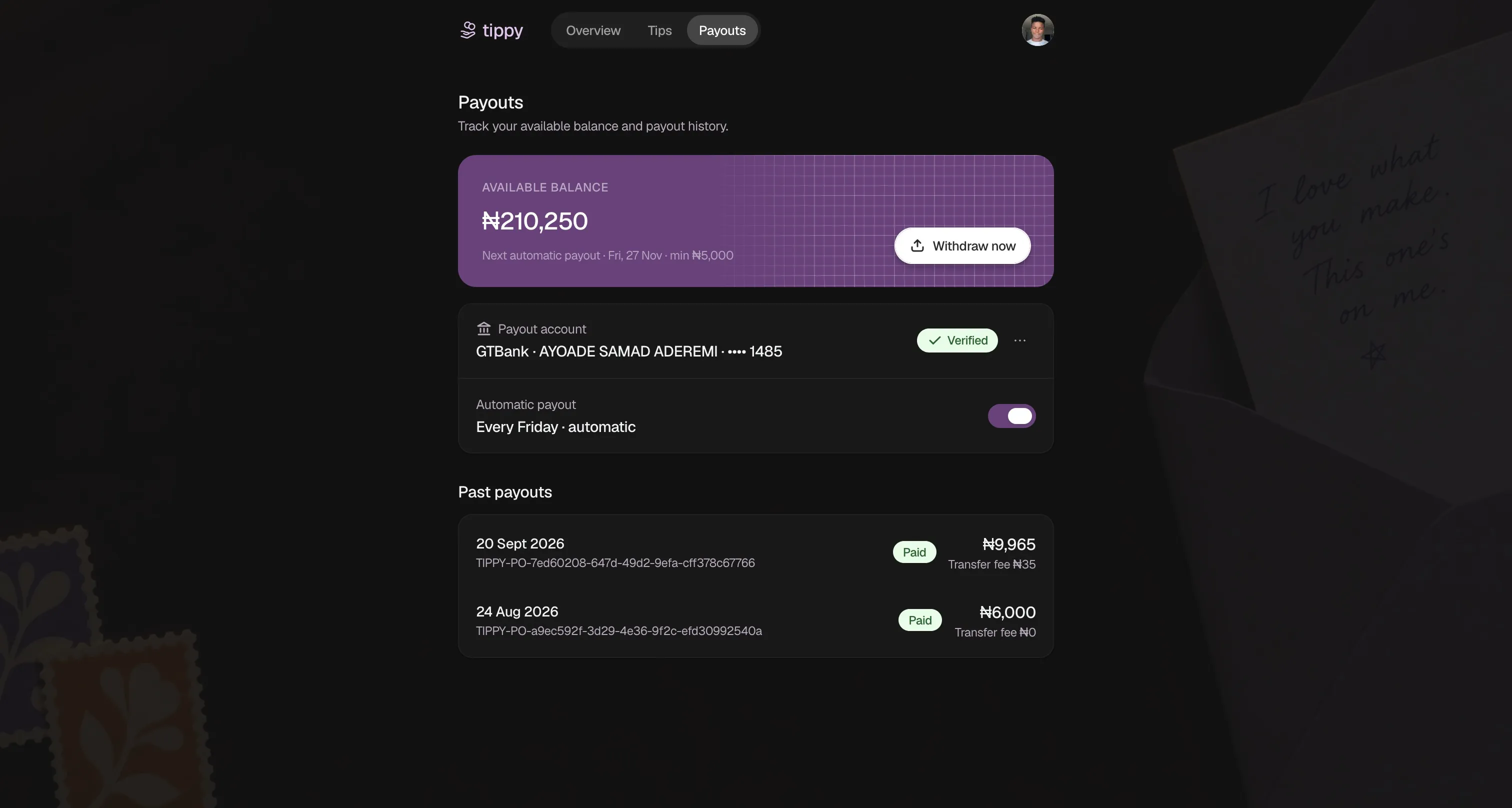
Creators must verify their bank details before withdrawing. Tippy supports manual withdrawals and optional automatic payouts, scheduled for eligible creators on Fridays.
Securing Financial Operations
Payment confirmation happens on the server, not from a browser’s claim that checkout succeeded. Tippy verifies webhook signatures and payment details before recording a successful tip.
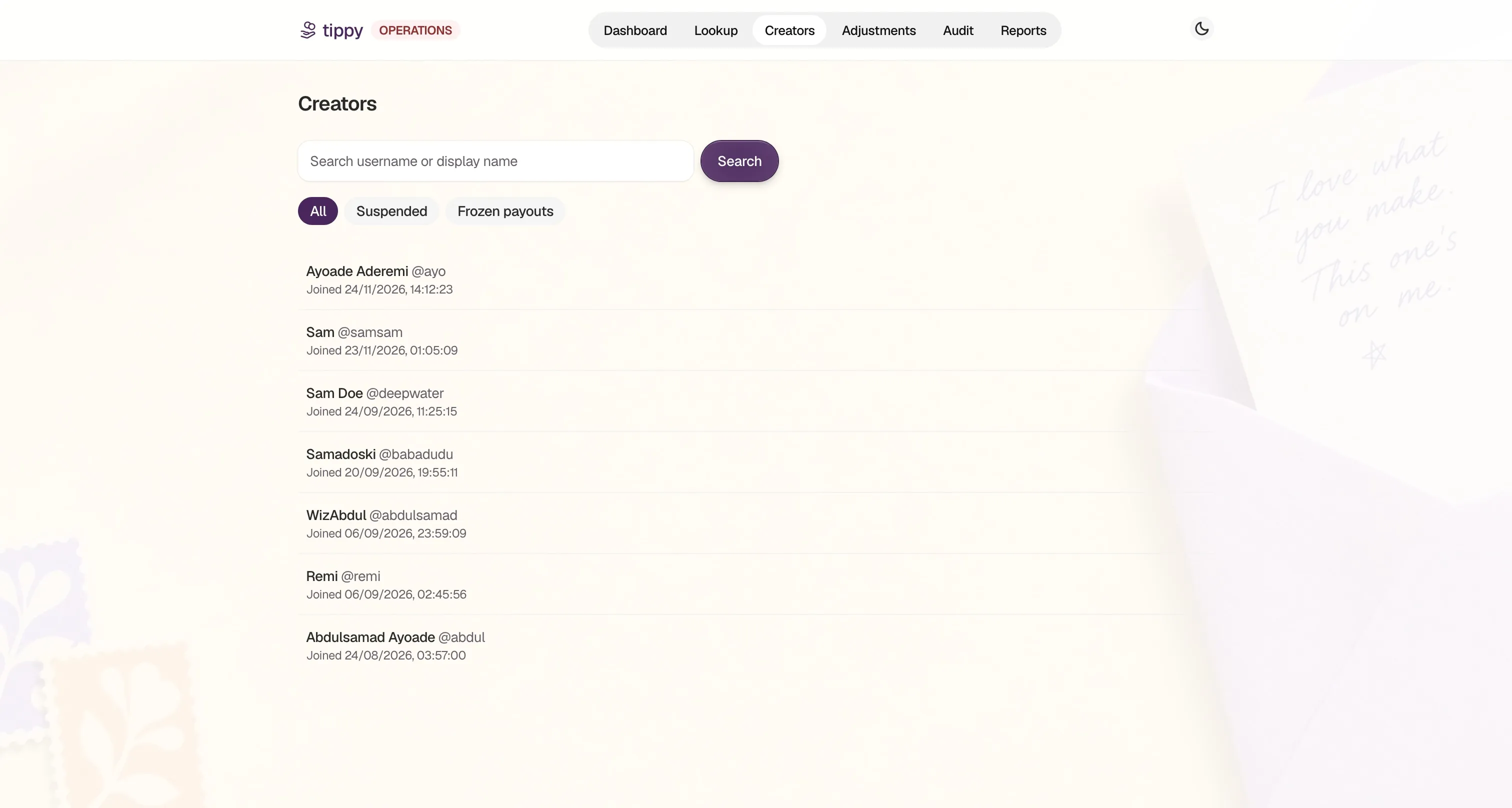
Creator operations are scoped to the authenticated user’s creator record. Admin actions require an admin role, two-factor authentication, and recent MFA verification; sensitive changes, such as balance adjustments and payout freezes, are authorized again on the server and written to audit records. Bank-account verification is also required before payouts, with fresh verification when bank details change.
Challenges & Trade-offs
Simpler Tipping, Less Precise Supporter Counts
Allowing supporters to tip without creating accounts removed a major step from the experience, but it also made unique supporter counts an estimate.
If two ₦1,000 tips arrive under the name “Tunde,” Tippy records two payments worth ₦2,000, but cannot know whether they came from one person or two. The dashboard groups matching names; anonymous tips are counted separately. The payment totals remain accurate, but the distinct-supporter metric has this limitation.
Payment Providers and Launch Readiness
The largest obstacle to moving beyond sandbox testing is operational approval process. Monnify required business verification and a corporate bank account, while opening that account introduced additional requirements, including bank referees.
My Paystack business account was later approved, providing another route for production payments. The payment architecture described in this case study reflects the Monnify implementation tested in sandbox, not a claim that a Paystack migration or live payouts are complete.
An Improvement for Payment Support
Supporters can receive a receipt by email, but the payment reference is not currently shown on the success screen. Displaying a copyable reference would make it easier for someone to contact support about a particular tip, especially if they did not provide an email address. This is an improvement I identified rather than a feature I’ve shipped.
Outcome & Learnings
I completed a working hackathon submission with creator onboarding, personalized tipping pages, payment tracking, a creator dashboard, and withdrawal flows. Tippy placed 5th among 72 ranked hackathon submissions. The application was deployed on Vercel, while the Monnify payment flows were tested in sandbox; live payment availability remained dependent on provider approval and integration.
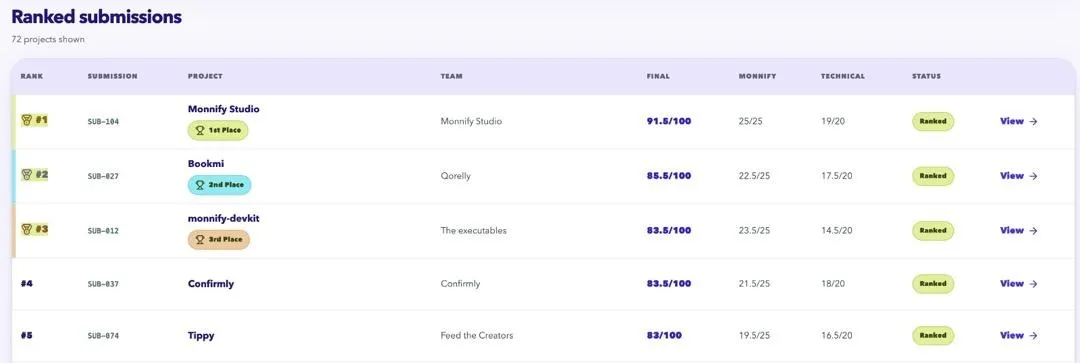
The project reinforced two lessons for me. First, designing directly in code can be an effective way to move quickly when the scope is focused and the deadline is short. Second, the hard part of a payments product isn’t just collecting money, it’s maintaining trustworthy records when requests overlap, confirmations arrive late, or a provider’s response is unclear.